
Introduction
Starting an eBay business is one of the most accessible ways to build income from home. But the difference between a profitable store and a money-losing hobby often comes down to one thing: knowing how to source products to sell on eBay cheaply. Many new sellers struggle because they pay too much for inventory or choose the wrong sourcing channels.
The good news is that there are dozens of ways to find inventory at low prices. Some methods require zero upfront cash, while others involve buying in bulk for maximum profit margins. The right approach depends on your budget, available time, and what you enjoy selling. This guide covers ten proven sourcing strategies, from thrift stores to wholesale suppliers. You will learn exactly where to find inventory, how to evaluate deals, and what mistakes to avoid. By the end, you will have a clear plan for sourcing products that leave room for strong profits.
Key Takeaways
- Start with items you already own to test the reselling process with zero upfront cost
- Use the eBay “sold items” filter to research actual sale prices before buying inventory
- Thrift stores, garage sales, and estate sales offer some of the best deals for beginners
- Wholesale suppliers provide the most scalable way to grow your business
- Always factor in eBay fees, shipping costs, and your time when calculating profit margins
- Specializing in one category helps you become an expert and spot better deals
- Request samples before committing to large wholesale orders
- Clearance sections at major retailers can yield high-margin flip opportunities
Start with What You Already Own
The cheapest inventory is the stuff sitting in your closet, attic, or garage. Experienced sellers often recommend this as the starting point for anyone learning how to source products to sell on eBay cheaply.
Look around your home for items you no longer use. Clothes that do not fit, electronics gathering dust, books you have already read, or gifts you never opened. These items cost you nothing to source, so every dollar you earn is pure profit after fees and shipping.
This approach has another advantage. It lets you test whether you actually enjoy the reselling process before spending money on inventory. You will learn how to photograph items, write listings, package orders, and handle shipping. If it feels like a chore, you have not lost any money. If you enjoy it, you can reinvest your earnings into buying more inventory.
Expert tip: Start with one category you know well. If you collect sneakers, list your extras. If you have vintage kitchenware, start there. Your existing knowledge helps you write better listings and spot value that others miss.
Common mistake: Listing items with unrealistic prices. Check what similar items actually sold for using eBay’s sold items filter before setting your price.
Thrift Stores, Charity Shops, and Goodwill
Thrift stores remain one of the best places to find cheap inventory. Goodwill, Salvation Army, and local charity shops receive donated items daily, and their pricing often does not reflect true market value.
The key is knowing what sells. Clothing from recognizable brands, vintage home decor, books in good condition, and electronics can all perform well. But you need to research before buying. When you learn how to source products to sell on eBay through thrift stores, regular visits and product knowledge become your greatest assets.
How to source effectively at thrift stores:
- Visit regularly. Inventory changes daily, and frequent visits help you spot fresh items.
- Check items for damage. Stains, tears, or missing parts reduce value.
- Look up sold prices on eBay while in the store using your phone.
- Focus on categories where you have knowledge.
- Visit stores in wealthier neighborhoods. They often receive higher-quality donations.
Pros and cons of thrift store sourcing:
| Pros | Cons |
|---|---|
| Very low cost per item | Time-consuming to visit stores |
| Wide variety of categories | Requires product knowledge |
| No minimum purchase required | Inconsistent inventory |
| Cash-and-carry, no shipping delays | Items may have quality issues |
Garage Sales, Yard Sales, and Estate Sales
Garage and estate sales offer some of the best deals for eBay resellers. Sellers at these events want to clear out items quickly, often pricing things well below market value.
Estate sales can be particularly profitable. When families need to empty a home after a death or move, they often price items to sell fast. You can find vintage furniture, collectibles, tools, and household goods at a fraction of their worth. This method of learning how to source products to sell on eBay requires patience and weekend availability.
Step-by-step garage sale sourcing:
- Check local listings on Craigslist, Facebook Marketplace, and newspaper classifieds.
- Plan your route. Map out sales in one area to save driving time.
- Arrive early for the best selection. Many sellers put out the best items first.
- Bring cash in small bills. Sellers often prefer cash and may offer discounts.
- Negotiate politely. Buying multiple items often earns a bulk discount.
- Research on your phone before committing to expensive items.
Expert tip: Go on the last day of an estate sale. Many organizers offer 50% off remaining items to avoid packing them up. This is a great way to source products to sell on eBay cheaply, especially for larger furniture or decor items that are harder to move.
Retail Clearance Sections and Discount Stores
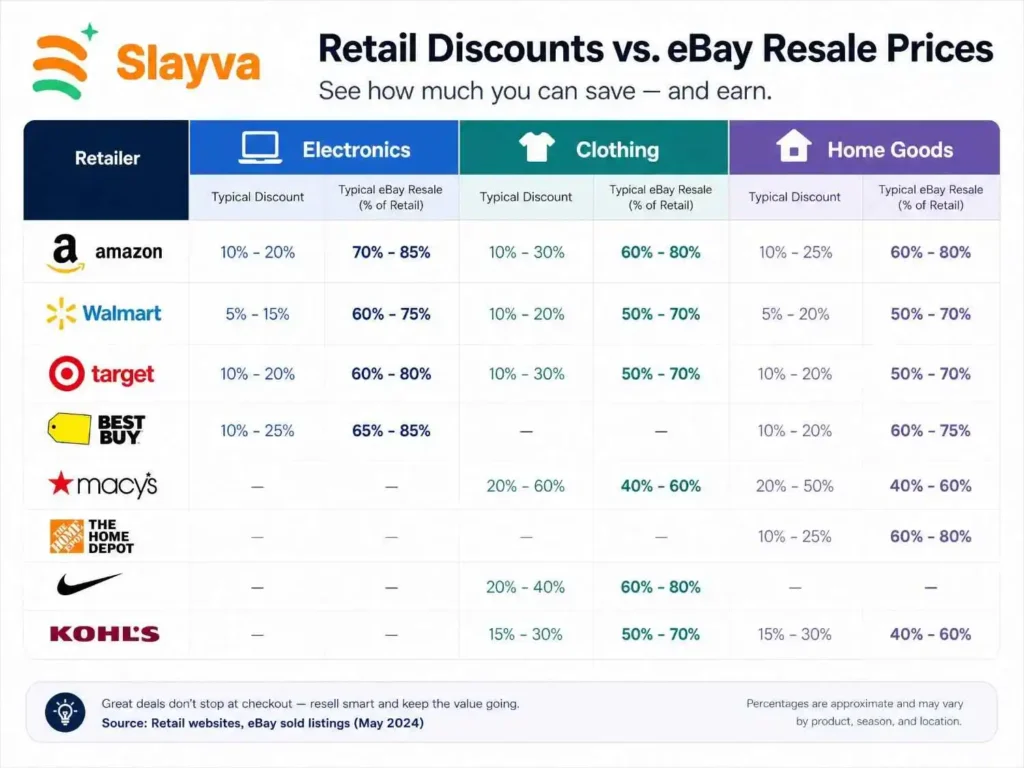
Major retailers like Walmart, Target, and department stores have clearance sections where they discount overstock, seasonal items, and returned merchandise. These items can often be resold at a profit on eBay.
Discount stores like Ross, Marshalls, T.J.Maxx, and Nordstrom Rack also offer opportunities. Resellers can find name-brand clothing, shoes, and home goods at prices well below retail. Understanding retail clearance is another way how to source products to sell on eBay with consistent supply.
What to look for:
- Items that are out of stock online or in other stores
- Seasonal products bought at the right time (e.g., winter coats in spring)
- Products with strong brand recognition
- Items that can be sold for at least double what you pay
Common mistake: Buying clearance items just because they are cheap. A 90% discount does not matter if nobody wants the product. Always research demand first.
Online Arbitrage: Websites and Flash Sales
Online arbitrage means buying products from one website and reselling them on eBay for a profit. Experienced sellers use this method to save time and gas money while accessing a wider range of products. This digital approach to how to source products to sell on eBay has grown significantly in recent years.
Best sites for online arbitrage:
- YOOX – Discounted luxury and designer items
- NET-A-PORTER – High-end fashion sales
- Nordstrom Rack online – Brand-name clothing and accessories
- Zulily – Flash sales on various categories
- Woot – Daily deals on electronics and gadgets
The strategy involves monitoring these sites for flash sales, seasonal discounts, and clearance events. When you spot a deal, compare the price against eBay sold listings. If the profit margin is strong enough, buy and list.
Pros and cons of online arbitrage:
| Pros | Cons |
|---|---|
| Shop from home, no travel time | Requires constant monitoring for deals |
| Items shipped directly to you | Shipping costs reduce margins |
| Access to wider product selection | Inventory can sell out quickly |
| Easier to scale | More competition from other resellers |
Wholesale Suppliers and Bulk Purchasing
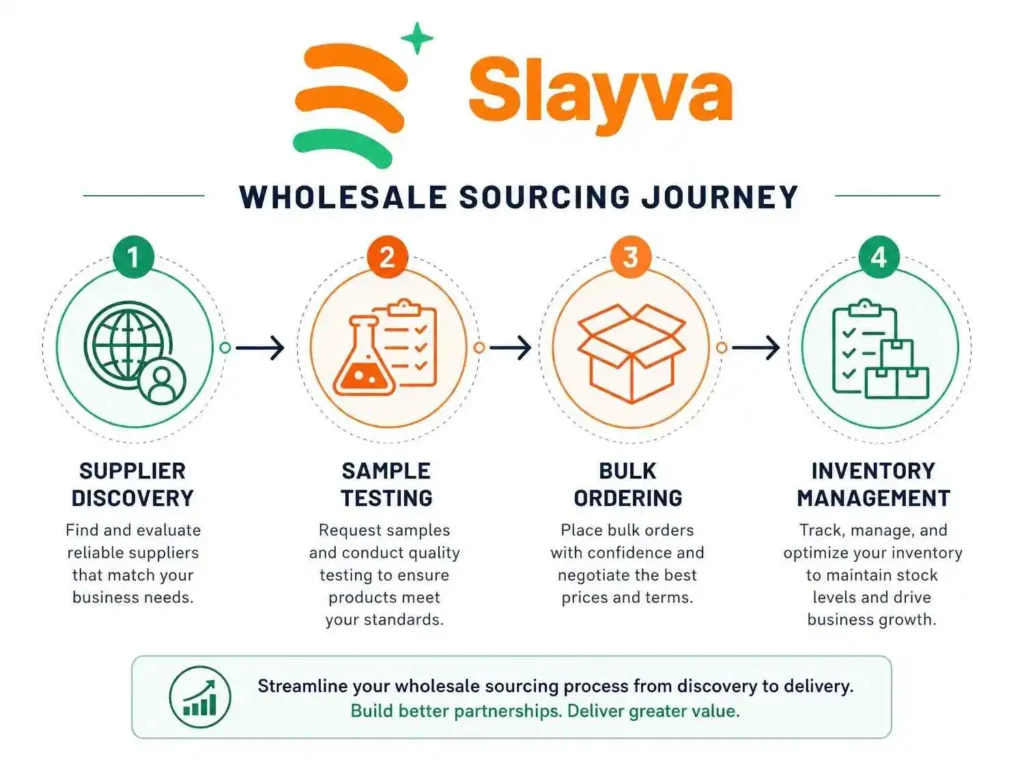
Wholesale sourcing is the most scalable way to build an eBay business. Instead of buying one or two items at a time, you purchase in bulk from suppliers at discounted prices. This method requires more upfront capital but offers higher profit potential per unit. Learning how to source products to sell on eBay through wholesale channels can transform a side hustle into a full-time business.
Top wholesale platforms for eBay sellers:
| Platform | Best For | Watch Out For |
|---|---|---|
| Alibaba | High-volume orders, electronics, custom products | Shipping times, supplier vetting |
| SaleHoo | Beginners, verified supplier directory | Membership fee |
| Faire | Unique stock, low MOQs, free returns on first order | Pricing can be higher than bulk imports |
| DHgate | Testing new products, smaller quantity orders | Quality can vary |
| Wholesale Central | Free directory, niche close-out products | Less supplier vetting |
| BULQ | Liquidation lots, prefilled draft listings | Buying sight unseen |
How to source wholesale products successfully:
- Choose a niche – Focus on a specific category where you have knowledge or interest.
- Research suppliers – Look for verified directories like SaleHoo or Worldwide Brands.
- Request samples – Never commit to a bulk order without testing product quality first.
- Check MOQ – Minimum order quantities vary widely. Some suppliers accept orders as low as two units.
- Calculate all costs – Include product cost, shipping, duties, eBay fees, and your time.
- Start small – Test with one product line before expanding.
Expert tip: China’s manufacturing hubs are specialized. Shenzhen dominates electronics, Yiwu leads in accessories and jewelry, and Dongguan specializes in apparel. Sourcing from the right region can improve quality and pricing.
Liquidation Sales and Wholesale Lots
Liquidation companies buy returns, overstock, and excess inventory from major retailers and sell them in bulk lots. This can be a great way to source products to sell on eBay cheaply if you are ready to buy larger quantities.
Where to find liquidation inventory:
- BULQ – Direct partnership with eBay, generates prefilled draft listings
- Liquidation.com – Various categories and lot sizes
- B-Stock – Returns and overstock from major retailers
What to consider before buying liquidation lots:
- Some lots are “mystery boxes” where you do not know exactly what you will get
- Returned items may be damaged, missing parts, or unsellable
- Factor in time to inspect, photograph, and list each item
- Check seller ratings and reviews on liquidation platforms
Common mistake: Not factoring in the cost of items that cannot be sold. If a lot has 100 items but 20 are damaged, your effective cost per sellable item is higher than the per-unit price suggests.
Facebook Marketplace and Craigslist
Local online marketplaces are excellent sources of cheap inventory. People list items for quick cash, often pricing well below what they could get on eBay. This peer-to-peer approach to how to source products to sell on eBay requires good negotiation skills and local transportation.
How to source effectively:
- Search for items priced below market value
- Negotiate via messaging before arranging pickup
- Bundle deals – buy multiple items from one seller for a discount
- Look for “moving sales” where people are clearing out entire households
- Check regularly, as good deals go fast
Best categories for marketplace sourcing:
- Furniture and home decor
- Electronics and video games
- Tools and equipment
- Musical instruments
- Collectibles and vintage items
Expert tip: Search for common misspellings. Sellers who make spelling errors often receive fewer inquiries, leaving bargains for those who find them.
Dropshipping as a Sourcing Method
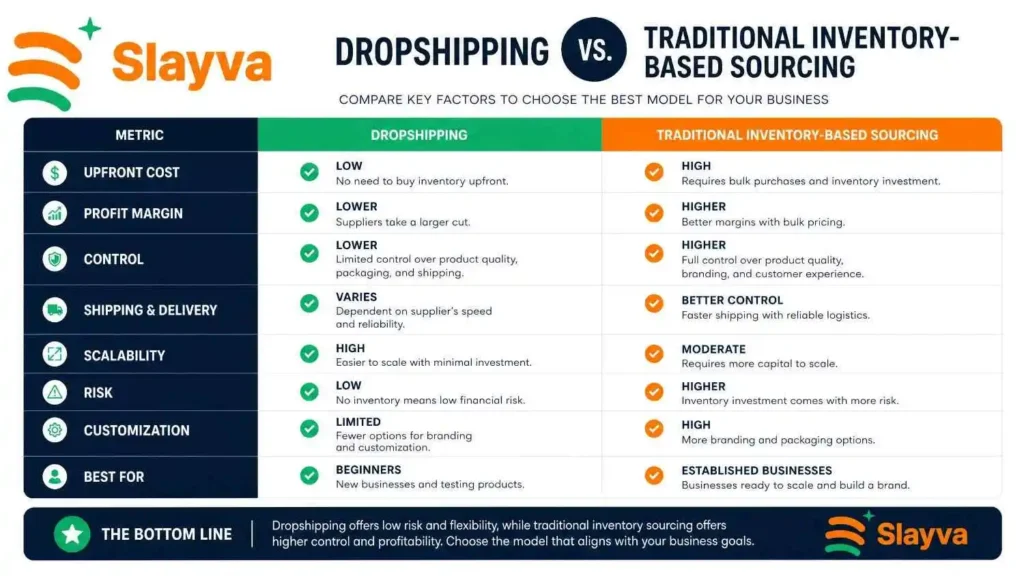
Dropshipping is a different approach to sourcing. Instead of buying inventory upfront, you list products from a wholesale supplier. When an item sells, you pay the supplier, who ships directly to the customer. While dropshipping is not traditional inventory sourcing, some sellers combine it with other methods of how to source products to sell on eBay.
eBay dropshipping rules:
- You must have a contract with a wholesale supplier
- You cannot buy from other retailers after a sale (retail arbitrage is prohibited)
- You are responsible for delivery and customer satisfaction
- You must be clearly identified as the seller on all packaging
Pros of dropshipping:
- No upfront inventory costs
- No storage space needed
- Easy to test new products
- Can list many items quickly
Cons of dropshipping:
- Lower profit margins
- Less control over shipping times
- Supplier stock issues can hurt your seller rating
- Violations can lead to account suspension
Dropshipping works best as a complement to inventory-based selling, not a complete replacement. Use it to test new categories before committing to wholesale purchases.
B2B Platforms and Supplier Directories
For sellers ready to scale, B2B platforms offer access to verified wholesale suppliers. These directories save time by vetting suppliers and providing clear pricing information. This is an essential part of learning how to source products to sell on eBay for sellers aiming to grow beyond casual flipping.
Recommended directories:
- SaleHoo – Over 8,000 verified suppliers, beginner-friendly community
- Worldwide Brands – Focuses on US-based wholesalers
- eSources – UK-based supplier directory
- Avartek Sourcing – Curated wholesale products with quality assurance
How to evaluate a supplier:
- Check their rating and reviews on the platform
- Request sample products
- Ask about shipping times and costs
- Confirm their returns policy
- Verify they comply with eBay dropshipping policies if applicable
Research Before You Buy: The Essential Step
No sourcing strategy works without proper research. Many sellers lose money because they buy inventory based on what they think will sell, not what actually sells. Knowing how to source products to sell on eBay includes mastering the research phase before spending any money.
How to research using eBay:
- Search for your product on eBay
- Click the “Sold Items” filter
- Review actual sold prices from the last 90 days
- Check how many units sold (trending items show “People want this” labels)
Compare on the spot: Experienced sellers take photos of price tags in stores and research using their phones before buying. This prevents costly mistakes and ensures you know the profit margin before handing over cash.
What to research:
| Factor | What to Check |
|---|---|
| Sold price | What similar items actually sold for |
| Demand | How many units sold recently |
| Competition | How many other sellers are listing the same item |
| Seasonality | Does demand spike at certain times? |
| Shipping costs | What do other sellers charge? |
Checklist for Evaluating a Product Before Buying
Use this checklist every time you consider buying inventory:
- Checked eBay sold items for similar products
- Calculated estimated profit after all fees
- Considered shipping size and weight
- Inspected item for damage or defects
- Confirmed brand authenticity
- Accounted for your time to photograph and list
- Checked if there is strong buyer demand
- Reviewed competitor listings and pricing
- Verified supplier reputation (if using wholesale)
- Ordered a sample before bulk purchase (if applicable)
Frequently Asked Questions
What is the cheapest way to source products for eBay?
Starting with items you already own costs nothing. Next, thrift stores, garage sales, and Facebook Marketplace offer very low-cost options. Many successful sellers started by selling their own unwanted items before reinvesting the profits into new inventory. This is often the first step in learning how to source products to sell on eBay effectively.
How do I find wholesale suppliers for eBay?
Use verified directories like SaleHoo, Worldwide Brands, or Faire. You can also source directly from Alibaba or DHgate, but always request samples first. BULQ offers another wholesale option directly on the platform. These are proven methods on how to source products to sell on eBay in bulk.
Is online arbitrage allowed on eBay?
Yes, online arbitrage is allowed as long as you own the items before listing them. This means buying inventory from another website and reselling it on eBay is fine. However, listing items you do not own and buying them after a sale (retail dropshipping) is against eBay policy. Familiarize yourself with eBay’s dropshipping policy.
What profit margin should I aim for?
Aim for at least 20-30% profit after all costs. Some sellers operate on lower margins with high volume, while others prefer higher margins with fewer sales. Calculate your net profit after eBay fees, shipping, cost of goods, and your time. This calculation is critical when figuring out how to source products to sell on eBay profitably.
How do I know what products are in demand?
Use eBay’s bestsellers page, check trending items, and filter sold listings. Look for products with high sales volume and consistent demand. Google Trends can also show seasonal patterns. Categories like electronics, collectibles, fashion, and home goods consistently perform well for those who know how to source products to sell on eBay.
Can I make a full-time income from eBay reselling?
Yes, many sellers earn six figures or more. It requires consistent effort, smart sourcing, and good listing practices. One seller reported $120,000 in sales over a year while working 30 hours per week on their side hustle. Learning how to source products to sell on eBay effectively is the foundation of this success.
What are the best eBay categories for beginners?
Clothing and accessories, home decor, books, and collectibles are beginner-friendly. These categories have low barriers to entry and plenty of sourcing opportunities. Many experienced sellers recommend choosing one category and becoming an expert in it. This specialization helps you learn how to source products to sell on eBay more efficiently.
How do I avoid losing money on inventory?
Always research before buying. Use the sold items filter, calculate all costs, and start with small test purchases. Avoid buying items just because they are cheap. If something seems too good to be true, it probably is. This discipline is essential when you learn how to source products to sell on eBay.
What is the best way to learn eBay sourcing?
Start small with items you already own. Then try different sourcing methods to see what works for you. Join seller communities, read seller forums, and learn from experienced resellers. The skills take time to develop. Consistent practice in how to source products to sell on eBay leads to better results.
Is dropshipping a good way to source products?
Dropshipping requires no upfront inventory costs but offers lower margins and carries compliance risks. It works best as a supplementary strategy. New sellers should understand eBay’s dropshipping policy before starting. It is one of several approaches on how to source products to sell on eBay.
Final Thoughts
Knowing how to source products to sell on eBay cheaply is the foundation of a profitable reselling business. The methods covered here range from free options like selling your own items to scalable strategies like wholesale sourcing. There is no single right approach. The best strategy depends on your budget, available time, and personal interests.
Start with one or two methods that fit your situation. Test them, learn what works, and expand gradually. Successful eBay sellers emphasize that consistency matters more than finding a “secret” source. The more time you invest in research and sourcing, the better your results become.
Begin this week. List something you already own. Learn from the process. Then use your earnings to try one of the sourcing methods in this guide. Your eBay business grows one sale at a time.