eBay Business Account vs Personal Account: Which Should You Pick?
- Updated
- eBay, eBay Beginner Guides
- 15 min read
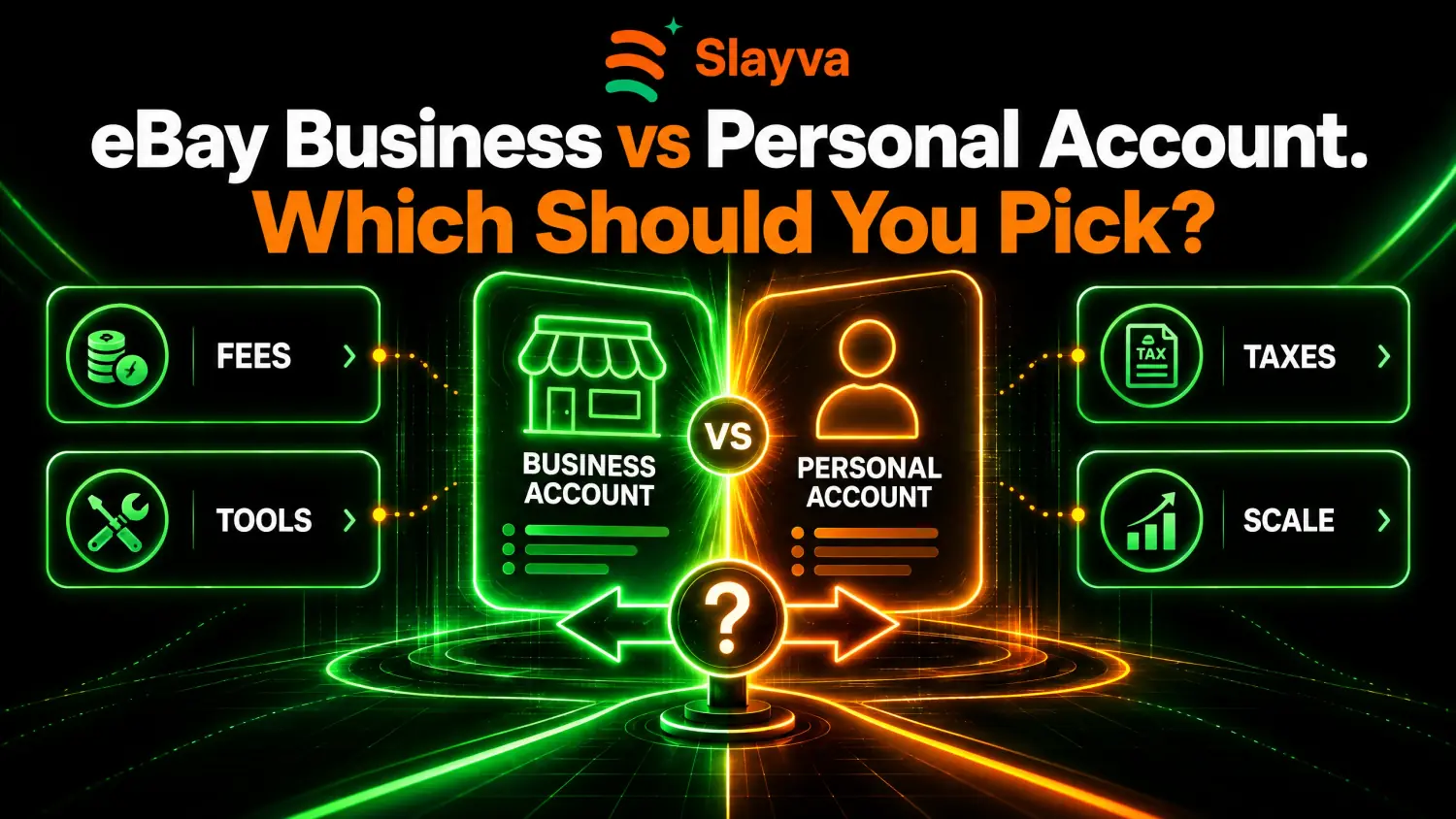
Table of contents
Key Takeaways
- A personal account is ideal for occasional sellers clearing out unwanted items. A business account is designed for those who buy to resell or sell regularly as a source of income.
- A business account lets you sell under a registered business name, with a business tax ID and business bank account. Most selling tools, including Promoted Listings and eBay Stores, are open to both account types.
- On eBay.com both account types pay the same fees, and either can lower them with an eBay Store. On eBay.co.uk, private sellers pay no final value fee on most items, while business sellers do.
- A business account may provide significant tax advantages by allowing you to deduct business expenses, but it also requires more paperwork.
- Every new account starts with monthly selling limits (items and total value) that eBay raises as the account builds a good selling history.
Introduction
Most sellers open a personal account because it is quicker, and for clearing out a wardrobe that is the right call. The question comes back once selling turns regular: buying stock to resell, listing every week, or selling on eBay.co.uk, where the two account types pay very different fees.
The choice between an eBay business account vs personal account isn’t just about a label. It decides who you are selling as, your fees on some eBay sites, and your tax obligations. Understanding the difference eBay business and private seller is essential before you commit to either option.
The question of should I open an eBay business or personal account comes down to one thing: your selling goals. Are you selling a few items here and there to make extra cash? Or are you building a business that you want to scale? The decision between eBay business account vs personal account will impact every aspect of your selling journey.
This guide breaks down the key differences between eBay business account vs personal account. We will explore eBay business account benefits for sellers, examine eBay personal seller limits 2026, and help you understand the difference eBay business and private seller. By the end, you will know exactly which account type is right for you. Whether you are wondering should I open eBay business or personal account or just want to understand eBay business account vs personal account thoroughly, this guide has you covered.
What Is an eBay Personal Account?
Who It Is For
An eBay personal account is designed for casual sellers. If you are looking to declutter your home by selling gently used clothing, electronics, or collectibles, this is the right choice for you. It is also suitable for those who occasionally sell items like antiques or inherited possessions. Essentially, if selling on eBay is a hobby rather than a primary source of income, a personal account is likely the best fit. Understanding the difference eBay business and private seller starts with knowing who each account type serves.
Key Features of a Personal Account
Here is a quick overview of what you get with a personal account. When comparing eBay business account vs personal account, these features represent the simpler side of the equation:
| Feature | Personal Account |
|---|---|
| Registration | Simple and straightforward. No business documentation required. |
| Selling Limits | New accounts start with monthly selling limits that rise with a good selling history. |
| Fees | On eBay.com, the same as a business account: 13.6% final value fee in most categories plus a per-order fee. On eBay.co.uk, no final value fee for private sellers on most items. |
| Tools | Seller Hub, Promoted Listings (once the account is eligible) and an eBay Store are all available. |
| Branding | Lists under your personal name. No option to display a business name on invoices. |
| Tax | You may not need to pay tax if you are selling personal items at a loss. However, frequent selling can trigger tax obligations. |
One of the most common questions sellers ask is should I open eBay business or personal account if I am just getting started. For many beginners, the personal account offers a low risk way to learn the platform. However, as you grow, you will quickly see the eBay business account benefits for sellers become more attractive.
What Is an eBay Business Account?
Who It Is For
A business account is for people who want to sell items regularly on the platform as part of their business. It lets you sell under a registered business name, with a business tax ID and a business bank account for payouts. The selling tools themselves, such as an eBay Store, managing inventory and listing in bulk, are largely the same for both account types; the difference is who you are selling as.
If you are a reseller who buys items to sell for a profit, a manufacturer, or someone who sells in large quantities, you should register as a business seller. It is also worth noting that in many countries, tax authorities consider eBay selling as trading if you are buying goods with the intention of reselling them, regardless of your account type. This is another important difference eBay business and private seller that many overlook.
Key Features of a Business Account
Here is a breakdown of the eBay business account benefits for sellers. When evaluating eBay business account vs personal account, these features often tip the scales for serious sellers:
| Feature | Business Account |
|---|---|
| Registration | More complex. Requires a business name, registered address, and potentially tax ID or VAT number. |
| Selling Limits | The same approach as personal accounts: monthly limits that rise with a good selling history. |
| Fees | On eBay.com, the same fees as a personal account; an eBay Store lowers them for many sellers. On eBay.co.uk, a final value fee by category (mostly 9.9% to 12.9%), a per-order fee and a 0.35% regulatory operating fee. |
| Tools | Seller Hub, Promotions Manager, analytics and inventory management tools; most are also open to personal accounts. |
| Branding | Can register with a company name, which will appear on all correspondences and invoices. This builds credibility. |
| Tax | Can deduct business expenses, such as the cost of goods, shipping supplies, and eBay fees, to lower taxable income. |
Many sellers who initially chose a personal account later switch to a business account once they realize the eBay business account benefits for sellers. The question should I open eBay business or personal account often becomes clearer after you start selling regularly and understand your needs.
eBay Business Account vs Personal Account: Detailed Comparison
To make the right decision, you need to understand the core differences. This eBay business account vs personal account comparison breaks down the key areas. Whether you are asking should I open eBay business or personal account or simply researching the difference eBay business and private seller, this section provides the answers.
Selling Limits
Many sellers expect selling limits to be the big difference, but eBay applies them to every new account, personal or business. They protect buyers while an account builds history: a cap on the number of items and their total value each month, which eBay raises as you sell well. These eBay personal seller limits 2026 can feel restrictive when you are trying to scale; our guide to increasing eBay selling limits explains how to ask for more.
Opening a business account does not lift those limits on its own; selling history does. If you have a lot of inventory or plan to scale quickly, start listing early and keep your service metrics clean. When comparing eBay business account vs personal account, choose on who you are selling as, not on limits.
Fees
On eBay.com both account types pay the same fees, and either can lower them with an eBay Store subscription. On eBay.co.uk the fees differ sharply: private sellers pay no final value fee on most items, business sellers pay one by category. Understanding the fee difference is essential for anyone evaluating eBay business account vs personal account.
| Cost | Personal Account | Business Account |
|---|---|---|
| Free listings (eBay.com, no Store) | 250 per month | 250 per month |
| Final value fee (eBay.com) | 13.6% in most categories, plus $0.30 or $0.40 per order | The same |
| eBay Store subscription | Available | Available |
| Final value fee (eBay.co.uk) | None on most items for private sellers | By category, mostly 9.9% to 12.9%, plus a per-order fee and a 0.35% regulatory operating fee |
Here are eBay.com’s Store subscription levels, from eBay’s Store subscriptions page (checked 14 October 2026). A Store also lowers final value fees in many categories; eBay lists those rates by category on its Store fee pages.
| Store level | Per month (monthly plan) | Per month (yearly plan) | Free fixed-price listings | Insertion fee after that |
|---|---|---|---|---|
| Starter | $7.95 | $4.95 | 250 | $0.30 |
| Basic | $27.95 | $21.95 | 1,000 | $0.25 |
| Premium | $74.95 | $59.95 | 10,000 | $0.10 |
| Anchor | $349.95 | $299.95 | 25,000 | $0.05 |
| Enterprise | Not offered | $2,999.95 | 100,000 | $0.05 |
The fee difference between eBay business account vs personal account can significantly impact your bottom line. For high volume sellers, the eBay business account benefits for sellers become even more pronounced.
Tools and Features
eBay’s selling tools are largely the same for both account types. What changes them is your seller level and an eBay Store subscription, not whether the account is personal or business. The main tools:
| Tool | Personal Account | Business Account |
|---|---|---|
| Seller Hub | ✅ Available | ✅ Available |
| Promoted Listings | ✅ Once the account is eligible (good standing, recent sales) | ✅ Once the account is eligible |
| eBay Store | ✅ Available | ✅ Available |
| Bulk listing and editing | ✅ In Seller Hub | ✅ In Seller Hub |
| Business name on listings and invoices | ❌ No | ✅ Yes |
| Business tax ID and business bank account | ❌ No | ✅ Yes |
Promoted Listings: Boost your visibility in search results. You only pay when your item sells (Cost-Per-Sale).
Promotions Manager: Run sales, create coupons, and offer discounts to your buyers.
Seller Hub: A comprehensive dashboard with detailed analytics on your performance, traffic, and sales.
Inventory Management: Bulk listing tools and analytics to manage your inventory efficiently.
When you consider eBay business account vs personal account, tool access is rarely the deciding factor. The question should I open eBay business or personal account comes down to whether you are trading, and to fees if you sell on eBay.co.uk.
Branding and Credibility
A business account lets you sell under a company name. This is a key eBay business account benefit for sellers. A professional name on invoices and correspondences builds trust with buyers. It signals that you are a serious seller, not just someone clearing out their attic. This distinction in the difference eBay business and private seller can impact your conversion rates.
Tax and Legal Implications
This is a crucial area where the “label” doesn’t matter as much as your “activity.” Understanding the tax implications is essential for anyone evaluating eBay business account vs personal account.
| Tax Aspect | Personal Account | Business Account |
|---|---|---|
| Expense Deductions | Limited or not allowed | Full deductions available |
| Tax Reporting | May still need to report if profitable | Must report all business income |
| Registration Requirements | None | May need business license or VAT number |
| Legal Liability | Personal liability | Can operate as LLC or corporation |
Personal Account: You might think you do not have to pay tax, but that is not always true. If you are buying items to resell for a profit, the tax authority in many countries considers that trading. You are required to report and pay tax on your profits.
Business Account: This account type makes it easier to manage your taxes properly. You can claim deductions for business expenses, such as the cost of goods sold, shipping supplies, eBay fees, and even a portion of your internet bill. However, it also means you are more likely to need to register for a business tax ID and file a business tax return.
The tax benefits are among the most significant eBay business account benefits for sellers. When asking should I open eBay business or personal account, consider how the tax implications will affect your overall profitability.
eBay Business Account vs Personal Account: Pros and Cons
Here is a summary of the pros and cons to help you decide whether you should open eBay business or personal account. This should I open eBay business or personal account decision guide covers the key tradeoffs.
Personal Account
| Pros | Cons |
|---|---|
| Simple and Fast Setup: Create an account quickly with minimal paperwork. | Not for trading: Buying to resell is usually a business, so a personal account stops being the right fit. |
| Sell Occasionally: Perfect for one-off sales or clearing out clutter. | No business identity: No business name, tax ID or business bank account on the account. |
| Stay Private: You do not have to display a business name. | Records are on you: Frequent selling can still create tax obligations, without an account set up for business reporting. |
Business Account
| Pros | Cons |
|---|---|
| Built for trading: The right account if you buy to resell or sell as a business. | More Registration Details: Requires a company name and tax information. |
| Separate finances: Payouts go to a business bank account, which keeps the books clean. | Potentially Higher Complexity: Managing a business account comes with more accounting and tax responsibilities. |
| Professional setup: Seller Hub, a Store and Promoted Listings work the same, under your business name. | Display Business Name: Your business name is visible, which some sellers may prefer to avoid. |
| Enhanced Credibility: Look like a professional seller, which builds buyer trust. | More Documentation: You may need to provide business registration or tax ID documents. |
| Tax Benefits: Claim deductions on business expenses like cost of goods, shipping, and fees. | UK fees: On eBay.co.uk, business sellers pay final value fees that private sellers do not. |
The pros and cons of eBay business account vs personal account show that each has its place. The difference eBay business and private seller becomes clear when you look at these tradeoffs.
Private Seller vs Business Seller on eBay.co.uk
In the UK the choice matters more than in the US, because eBay.co.uk charges the two account types very differently. From eBay UK’s fee pages (checked 14 October 2026):
- Private sellers pay no final value fee and no regulatory operating fee when items sell, and get 300 free listings a month (35p each after that). They can still use Promoted Listings and take a Shop subscription.
- Business sellers pay a final value fee by category (mostly 9.9% to 12.9% of the total sale), a per-order fee of £0.30 or £0.40, and a 0.35% regulatory operating fee.
- Cars, motorcycles and other vehicles are outside free selling, and private sellers pay a 3% international fee on items posted abroad.
That makes a private account tempting, but the account type should match what you actually do: if you buy goods to resell or make items to sell, that is usually trading, and you should sell as a business. The full UK fee breakdown is in our eBay seller fees guide.
Which One Should You Choose?
The choice between eBay business account vs personal account depends on your answer to the question: “Why are you selling?” This is the core of the should I open eBay business or personal account decision.
Choose a Personal Account If:
| Scenario | Reason |
|---|---|
| You are selling occasionally to clear out unwanted items. | No need for advanced tools or high limits. |
| Selling is a hobby and you do not buy items specifically to resell. | You are not operating as a business. |
| You are comfortable with the selling limits of a personal account. | Low volume sales are sufficient for your needs. |
| You are just starting and want to test the waters before committing. | Low risk way to learn the platform. |
Choose a Business Account If:
| Scenario | Reason |
|---|---|
| You are buying items to resell for a profit. | You are operating as a business. |
| You are a manufacturer, wholesaler, or have a registered business. | Professional selling requires professional tools. |
| You plan to sell in high volume or want to scale your eBay operations. | Volume selling is usually trading, and a business account keeps it separate. |
| You want buyers to see a business name on listings and invoices. | It builds trust, especially with business buyers. |
| You want to build a professional brand and gain tax advantages. | Business accounts offer tax deductions and credibility. |
| You are already a “business” in the eyes of the tax authority. | You need to keep your finances separate and report income properly. |
💡 Note: If you are a hobbyist who wants a storefront, you do not need a business account: an eBay Store is open to personal accounts too, and the eBay seller fees breakdown shows what each option costs. In some regions you can upgrade a personal account to a business account without starting over, but check the rules for your location.
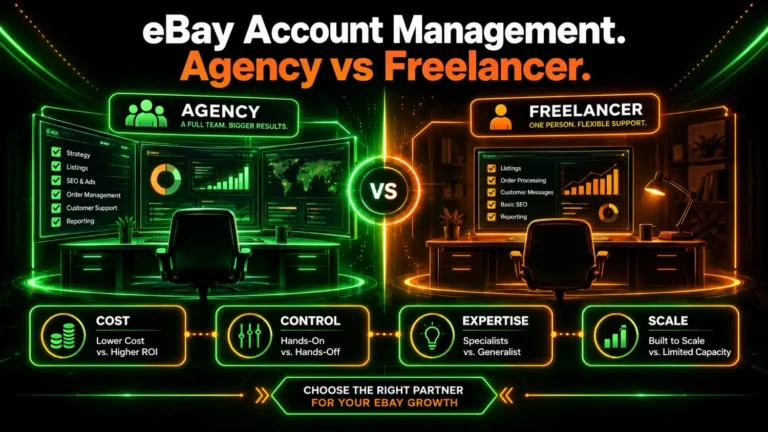
Whichever account you choose, the day-to-day work is the same: listings, orders, buyer messages, returns and account health. If you would rather hand that over, see our eBay account management services. Weighing up who to hand it to? Our comparison of an eBay account management agency vs a freelancer covers the differences.
Frequently Asked Questions About eBay Business Account vs Personal Account
Can I switch from a personal account to a business account?
Yes. You can upgrade your personal account to a business account through the settings in “My eBay.” However, downgrading from a business account to a personal account is not usually possible and requires contacting eBay support.
What happens if I sell regularly on a personal account?
If you sell regularly and buy items to resell, you may exceed eBay’s selling limits. More importantly, you may be considered a business by the tax authorities. This means you are legally required to report and pay tax on your profits, even without a business account.
Do I need a business account to get an eBay Store?
No. On eBay.com an eBay Store is open to personal and business accounts, and subscribing does not make the account a business account. On eBay.co.uk, private sellers can also take a Shop subscription.
Which account has higher fees?
On eBay.com, neither: both pay the same final value fees (13.6% in most categories, plus a per-order fee), and either can lower them with an eBay Store. On eBay.co.uk, business sellers pay more: private sellers pay no final value fee on most items, while business sellers pay one by category plus a regulatory operating fee.
Can I get tax benefits with a business account?
Yes. With a business account, you can deduct legitimate business expenses from your taxable income. This can include the cost of goods, shipping supplies, eBay fees, and a portion of your internet and home office costs. This is one of the major eBay business account benefits for sellers.
What selling limits do personal accounts have in 2026?
eBay does not publish one fixed starting limit. New accounts, personal or business, start with a monthly limit on the number of items and their total value, and eBay personal seller limits 2026 rise as you build positive feedback and a selling history.
Is it possible to have both a personal and business account?
Yes, you can have both. Some sellers maintain a personal account for buying and selling personal items, and a separate business account for their reselling business. This helps keep finances and records separate.
⚠️ Is your eBay account currently restricted or suspended? Don’t let policy violations ruin your business momentum. Learn how to restore your selling privileges with our dedicated eBay Suspension Recovery Service.
Whichever account type you choose, staying compliant with eBay’s policies matters just as much as the setup itself. If you’re ever facing a policy issue or suspension, our eBay suspension recovery service can help.
Conclusion
The question of eBay business account vs personal account is a fundamental choice for anyone selling on eBay. There is no single right answer that works for everyone. It all depends on your goals. Understanding the difference eBay business and private seller is essential before making this decision.
If you are a casual seller looking to make some pocket money by clearing out your home, a personal account is simple and effective. It is a low-commitment way to get started without any paperwork. The eBay personal seller limits 2026 may be sufficient for your needs.
However, if you are serious about selling, whether it is a side hustle or a full-time job, a business account is the right choice. It provides the tools, flexibility, and credibility you need to grow. The higher selling limits, access to powerful promotions, and ability to deduct business expenses make it a better option for anyone looking to scale. The eBay business account benefits for sellers are substantial.
Remember, the “label” does not change your tax obligations. The activity does. If you are buying to resell, you are running a business in the eyes of the tax authorities. A business account is simply the right way to do it. When you ask yourself should I open eBay business or personal account, think about where you want to be in six months or a year. The right choice today will set you up for success tomorrow.

Mubshar
All posts by MubsharNeed this handled for you?
eBay Seller Account Setup
Business account, policies and store set up correctly.
See the serviceeBay Account Management
Listings, orders, cases and growth, run for you.
See the service- Have this problem now? eBay account suspended (MC999)
- Have this problem now? eBay sales dropped