How the TikTok Shop Algorithm Actually Works in 2026 and How You Can Beat It
- TikTok Shop, TikTok Shop SEO & Algorithm
- 12 min read

Table of contents
Introduction
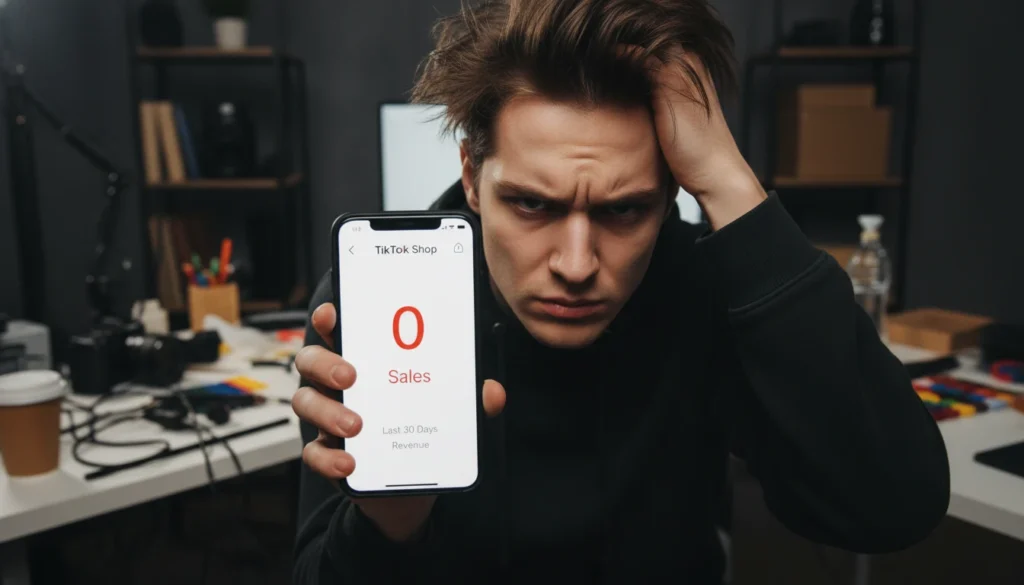
You know the feeling. You unbox a product you genuinely love, film a crisp 30-second clip, and hit “Post.”
Then… crickets. 200 views. Zero sales.
Meanwhile, a competitor’s grainy, poorly lit video of a similar product racks up 50,000 views and sells out overnight.
The difference is rarely luck. TikTok decides who sees a shop video using signals it partly documents and partly keeps to itself, and sellers who understand those signals can plan for them instead of guessing.
This guide separates what TikTok has said about how it recommends videos and ranks shop products from what sellers consistently observe, then turns both into a content framework you can repeat.
What Is the TikTok Shop Algorithm?
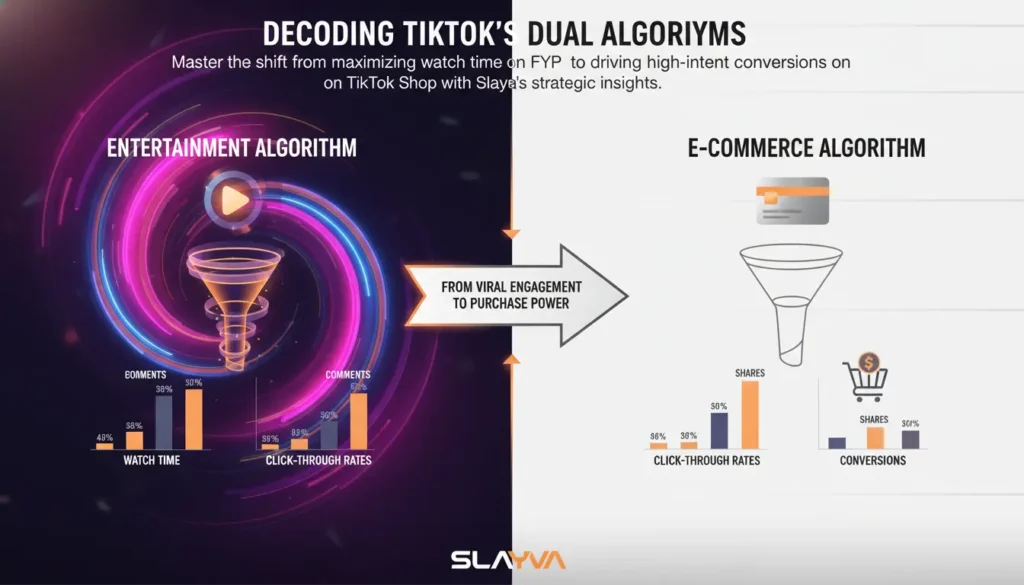
There is no single “TikTok Shop algorithm.” TikTok runs recommendation systems for the For You feed, for search and for the Shop tab, and on commercial content they share one aim: show products to people who are likely to buy them and be happy with them.
An entertained viewer who never buys does little for a shop video. That is why creators with big followings often sell less than small accounts whose audience is interested in the product.
For You Feed vs. Shop Tab and Search
Shop content reaches buyers in two main ways, and they reward different things:
Two parallel engines now operate side by side:
- The For You feed: TikTok says it recommends videos based on user interactions (what people watch, like, share, comment on and follow), video information such as captions, sounds and hashtags, and device and account settings. Watch time is one of the strongest signals.
- The Shop tab and product search: products are ranked on how well they match the search and on product and shop quality, such as ratings, reviews, delivery performance and the shop’s Account Health Rating.
What sellers consistently see: a video that attracts viewers with no interest in the product collects views without sales, and its reach to shoppers fades. The product matters as much as the video, since rating, price after TikTok Shop fees and delivery speed all affect how a product ranks. TikTok’s business blog publishes its current guidance for shopping content.
Products, Creators and Buyers
Three things are in play when TikTok decides who sees a shop video:
- Products: ratings, reviews, delivery performance and price. A product with poor reviews struggles however good the video is.
- Creators: TikTok does not publish a creator score, but sellers consistently find that creators whose audience buys in a category outsell larger accounts whose audience does not. That is also how the TikTok Shop affiliate program works best.
- Buyers: recommendations are personal. TikTok uses each shopper’s own activity, including what they watch, search for and buy, to decide which products to show them.
Search matters more each year. Many shoppers now search TikTok directly for products, so captions and product titles that match how people search are part of how a video and a listing get found.
How Does the TikTok Shop Algorithm Work for Sellers in 2026?
Getting views on a funny skit and getting sales from a shop video run on different tracks. TikTok has become good at telling a good video from a good product video, and sellers who do not adjust get left behind.
These are the signals sellers consistently find matter for shop videos.
1. Comments That Show Buying Intent
Generic comments such as “Love this!” add little. Comments that show buying intent are a much better sign that a video is reaching shoppers:
- “Does this come in blue?”
- “Where’s the link?”
- “How much is this?”
- “Just ordered, hope it’s worth it.”
Reply to these quickly, ideally pointing to the product link, so the conversation moves toward a purchase. For engagement benchmarks, Socialinsider’s TikTok performance data is a useful reference.
2. Watch Time Around the Demonstration
Watch time is one of the strongest signals TikTok uses. In a shop video, the part that matters most is the moment the product does its job.
If viewers re-watch the moment of the transformation, the video is working. Put that moment early, and keep the video short enough that people reach it.
This is why demonstration-heavy content consistently outperforms talking-head reviews.
3. What Happens After the Click
A click is only the start. Sellers consistently see that videos whose clicks bounce straight off the product page stop scaling, while videos whose clicks turn into add-to-carts and orders keep getting shown.
Watch these numbers in your analytics:
- Dwell time on the product page after the click
- Whether the user adds to the cart or simply exits
- Return visits to the same product listing
- Orders attributed to the video
A misleading hook can win the click and lose the sale. Make sure the product page delivers what the video promised: the same product, clear photos and an honest description.
Why Are My TikTok Shop Videos Not Getting Views?
Before you whisper the word “shadowban,” check the basics: most reach problems come from a mismatch between the content and the shoppers it reaches.
Here are the real culprits behind low-performing shop videos.
The 3-Second Death Scroll
The most common problem is a slow start.
If your first 3 seconds contain:
- A brand logo animation
- An awkward pause or throat clear
- A generic “Hey guys, today I want to show you…”
…you have already lost most of the viewers who might have bought. Viewers decide in the first seconds whether to keep watching, and early drop-off limits how far TikTok shows the video.
Wrong Audience Targeting by Design
Sometimes the TikTok Shop algorithm gives you exactly what you asked for—just not what you actually wanted.
A video that explains every technical feature of a high-end gadget in jargon might hook tech enthusiasts and earn strong watch time. But if those viewers do not buy, the video keeps reaching people who watch rather than people who buy, and the shoppers who would have ordered never see it.
The “Overly Salesy” Penalty
Shoppers scroll past hard pitches, and TikTok Shop’s policies prohibit misleading claims such as fake scarcity.
Hard-sell content tends to underperform:
- Aggressive call-to-actions crammed into every sentence
- Flashing price tags and countdown timers
- Scripts that read like late-night infomercial transcripts
- Fake urgency (“Only 2 left!” when stock is plentiful)
Shoppers respond to an honest demonstration, not a sales pitch. TikTok’s Creator Portal sets out the content practices TikTok recommends.
How to Get More Visibility on TikTok Shop in 2026
Visibility is no longer about a hashtag trick or posting at a “magic hour.” It is about making clear, from the first second, who the video is for.
The Hook-Driven Content Formula
Your hook must filter for qualified buyers. The first seconds decide who keeps watching, and so who TikTok shows the video to next.
Start with a pattern interruption that identifies the problem and promises a solution. For example, instead of:
“Here’s a really nice moisturizer that I’ve been loving lately…”
Try:
“If your foundation separates by noon in this humidity, watch this 15-second fix.”
You have identified the exact problem, filtered your audience to the people who care, and promised a fast, valuable fix. The viewers who stay are the ones worth showing the product to.
Trend Hijacking 2.0: The Commercial Weave
Stop using trending sounds just because they are popular. Use a trend only when your product fits its story.
If a “wrong answers only” audio is trending, your text overlay shouldn’t be random jokes disconnected from your niche. Instead, use:
“When someone says [cheap drugstore alternative] is the same as [your premium product]”
This combines entertainment with a clear product comparison, so the video works for viewers who came for the trend and for shoppers comparing products.
The Story-to-Product Ratio
No one cares about your product’s triple-stitched seams. They care about the story of hiking through a sudden downpour and arriving completely dry. Content that shows outcomes sells better than content that lists features.
Spend most of the video on the result, and keep feature mentions brief.
Sell the result and the transformation, not the spec sheet.
Using Analytics as Your Creative Director
Stop guessing what works. Let your data show you how viewers respond in your niche.
Open your TikTok Shop analytics dashboard and:
- Find the exact second viewers consistently drop off
- Identify where retention spikes upward
- Study which moments trigger the most re-watches
If viewers leave during the B-roll of packaging, cut it entirely. If retention spikes right before the product transformation reveal, that moment becomes your new opening hook. Build a “retention spike template” by cloning the moments with the highest engagement curve across multiple videos.
TikTok Shop SEO Tips for New Sellers in 2026
Many shoppers now search TikTok directly for products. Matching the words they use is part of being found.
Where Keywords Go on TikTok Shop
Keywords matter in three places:
- Captions: The first line must function as a search query answer
- Product Titles: Exact long-tail keyword phrases, not just brand names
- Hashtags: A strategic mix of:
- 1-2 massive niche tags for broad discovery
- 1-2 specific product descriptor tags
- 1 explicit “intent-to-buy” tag like #TikTokMadeMeBuyIt
The Search-First Content Method
Identify a high-intent, long-tail keyword phrase like “running jackets for short women waterproof.”
Make the first text overlay on screen mirror that search, and start your spoken hook with the same words. Treat the video as a direct answer to a question someone just typed into the search bar. Videos that answer a search clearly are easier for TikTok to match to it. Backlinko’s guide to TikTok SEO covers the method step by step.
Product Listing Discovery Optimization
A great video brings the crowd. A poor product listing sends them home empty-handed. The product’s rating, reviews and listing quality affect how it ranks in the Shop tab and search, and whether viewers who click actually buy.
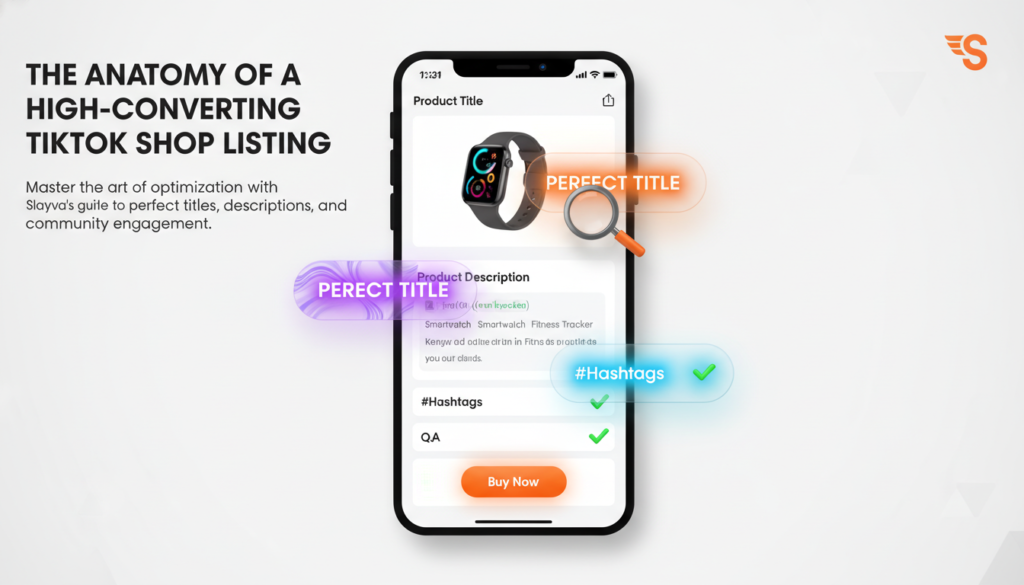
Follow the image requirements in Seller Center: a clear, square photo of the product works best as the main image, and the other images can show the result and the details. Write the description around outcomes, not just features, and answer the questions buyers ask most in the description itself.
Advanced Tactics for TikTok Shop Videos
Once the foundation is solid, these tactics help good videos travel further.
The Programmable Loop Video
Create a video with a one-second visual cliffhanger at the end that blends into the start, so it plays as a loop.
For example: Begin tightening a bolt, then cut at frame 5 of the twisting action. End the video with a satisfying mechanical click sound and a new text hook: “Wait until you see what happened next…”
A viewer who loops the video while looking for the cut adds watch time, one of the strongest signals TikTok uses.
The Curiosity Gap 2.0
Do not reveal the product in the first frame. Frame it as a mystery object that solves a specific, relatable problem, so viewers stay to see what it is.
“This $7 object I found on TikTok Shop solves the damp bathroom smell permanently. And no, it’s not baking soda, not an air freshener, and not something you’ve tried before.”
The viewer wants to see whether their guess was right, so more people stay through the moment the product appears.
Pinned Comments That Point to the Product
Do not just ask for comments. Use them to move interested viewers toward the product.
Pin a comment that functions as a secondary hook and conversion tool:
“The price is honestly a steal considering this single tool replaces three separate gadgets in my kit. Links in the yellow cart below 👇”
When viewers comment “price,” “need this” or “link,” reply with a pointer to the product link. You have turned engagement into a direct, trackable path to checkout.
The Content Framework That Actually Works
Stop starting from scratch every time. Use this repeatable structure.
The Hook → Value → Soft Sell Formula
Here is a 15 to 30 second structure that works across most product niches:
0–3 Seconds: The Pattern Interruption
Start mid-action or with a jarring visual statement. No introductions, no logos, no context.
Example: “Most people use this kitchen tool daily and press it totally wrong…”
(Shows a common, clumsy finger pressing a button incorrectly)
3–20 Seconds: The Demonstration Value. Immediately show the correct method and the better result it creates. Pure ASMR, an aesthetic transformation, or rapid tips. No price talk. No discount codes. Just clear value that proves the hook’s promise.
20–30 Seconds: The Invisible Sell
While continuing the visual demonstration, a subtle text overlay fades in:
“This mechanism is the only reason it lasts 2 years longer than the standard version. Tap the product link below.”
Caption reads simply: “My one kitchen upgrade that finally made sense.”
The sell arrives as the logical end of the value you have shown, not as a separate, jarring pitch.
Frequently Asked Questions About the TikTok Shop Algorithm
How long does it take to grow on TikTok Shop?
Many new sellers see first traction within two to four weeks of consistent, focused posting. “Traction” does not mean viral fame. It means a first handful of sales and enough analytics data to refine your approach.
TikTok needs data to work out who your buyers are, and that data comes from posting consistently.
Realistic timeline expectations:
- Weeks 1-2: TikTok tests your videos with different audiences
- Weeks 3-4: First consistent sales if content and product alignment is strong
- Months 2-3: Scalable growth as the system confidently identifies your buyer persona
- Month 6+: Potential for exponential growth with a proven content library
How many videos should I post daily?
The short answer: one to two high-quality, strategy-driven videos outperform five rushed, generic ones every single time.
The longer answer: consistency and quality beat raw volume. A single video with a strong hook and a clear product will outperform a week of low-effort posts.
Recommended posting cadence:
- Beginners: 1 video per day, focusing entirely on nailing the hook and demonstrating value
- Intermediate (consistent sales): 1-2 videos per day, with one being a “safe” format and one testing a new approach
- Advanced (scaling): 2-3 videos per day across different angles and product use cases
Whatever the volume, never sacrifice the hook for quantity. Each video is judged largely on its own performance, and one strong video beats ten weak ones.
Do hashtags still matter in 2026?
Yes, but not in the way most sellers think. Hashtags are no longer the main way videos are discovered. They mostly help TikTok understand what a video is about.
Use hashtags to tell TikTok your niche and audience. A long list of 20 or more tags blurs that signal more than it helps.
The 2026 hashtag strategy that works:
- 1-2 broad niche hashtags: #TikTokShopFinds, #BeautyTok
- 1-2 specific product hashtags: #WaterproofRunningJacket, #MiniHumidifier
- 1 intent-to-buy hashtag: #TikTokMadeMeBuyIt, #FoundItOnTikTokShop
Resist the temptation to stuff trending but irrelevant tags. Contextual clarity beats hashtag volume every time.
Why do my viral videos get views but no sales?
This is the classic sign of a video made for entertainment rather than for buyers. It entertains broadly but does not filter for people who want the product.
Entertainment-focused viewers watch, laugh, maybe like, and scroll on. They were never in a buying mindset, so the video’s reach grows among viewers while sales stay flat.
The fix: add a buyer-filtering mechanism to your hook. Identify the specific problem your product solves within the first 3 seconds so that only relevant, potential customers stick around.
Can I recover a “dead” TikTok Shop account?
In most cases, yes. Each video is judged largely on its own performance, so a “dead” account is usually one that has been making videos for viewers rather than buyers.
Recovery steps:
- Audit your last 20 videos. Identify which ones had even minor sales and study what set them apart.
- Stop making the formats that brought views without sales.
- Post a new, hook-driven video targeting a specific buyer problem.
- Repeat daily for 2 weeks without checking analytics obsessively.
Fresh, focused content consistently outperforms accounts with larger followings but no buyers in the audience.
Conclusion
Winning on TikTok Shop in 2026 is not about chasing a single viral moment or a secret hack that guarantees overnight success. It never was.
What works, consistently, comes down to three things:
- Clarity: content that signals in the first seconds who it is for and why they should care
- Consistency: regular posting that gives TikTok enough data to find your buyers
- Commerce intent: Videos designed to demonstrate value and drive purchases, not just entertain random scrollers
Start posting the right content today. Not more content. Better content, made for the people who buy.
Test your hooks ruthlessly. Study your retention graphs. Cut everything that does not serve the sale.
Your first sale from this strategy is one structured, buyer-focused video away. Go create it.
Next step
Want TikTok Shop handled properly — setup, creators and ad scaling included? TikTok Shop management.

Mubshar
All posts by MubsharNeed this handled for you?
TikTok Shop Management
Listings, creators, ads and operations.
See the serviceTikTok Shop Account Recovery
Violations appealed and the rating rebuilt.
See the service- Have this problem now? TikTok Shop account health violations