

Key Takeaways
- Profitability vs. Volume: Amazon wins on sales volume, but eBay often delivers higher profit per sale, making the choice product-dependent.
- Fee Structure: eBay’s final value fees are higher, but Amazon’s FBA costs can quickly eat into margins, making eBay cheaper for self-fulfilled items.
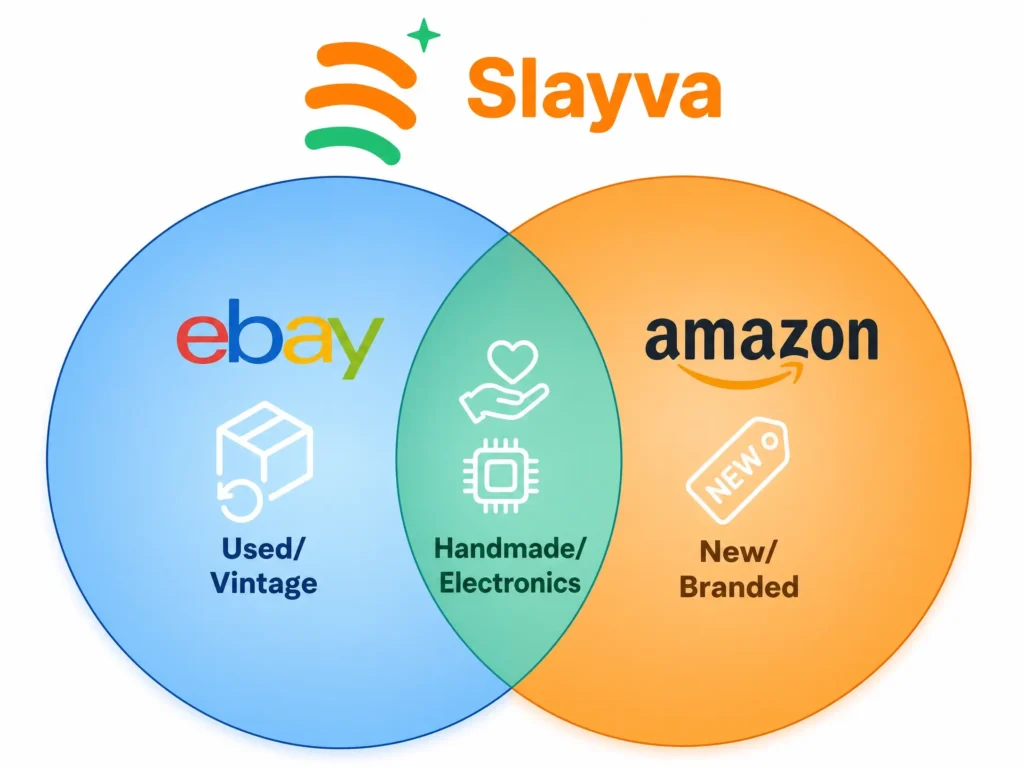
- Product Type is Everything: Amazon is for new, branded, and replenishable goods, while eBay is the undisputed champion for used, vintage, and unique items.
- Seller Experience: eBay offers more flexibility and control, while Amazon provides massive reach but with stricter rules and less customer ownership.
- The Best Strategy: The most successful sellers in 2026 are not choosing one platform over the other but using both to maximize their total revenue and profits.
- Start Simple: Done beats perfect. Pick one platform, start selling, and expand to the second once you have a system in place.
Introduction
I sold the same product on both platforms for three months.
Same vintage camera. Same photos. Same price. Amazon moved twice the units. eBay delivered nearly triple the profit per sale. The total earnings forced me to rethink everything I knew about eBay vs Amazon for sellers 2026.
Most comparison guides on eBay vs Amazon for sellers focus on features. Features do not pay your rent. Profit does. The platform that makes you more money is the platform you should prioritize.
“Amazon wins on volume. eBay wins on margins. The sellers earning the most in eBay vs Amazon for sellers 2026 understand which platform to use for which products.”
This guide compares eBay vs Amazon for sellers 2026 with real numbers. Fee structures. Profit calculations. Category performance. The exact scenarios where each platform outperforms the other. Whether you are asking eBay vs Amazon for sellers which is better for new products, or eBay vs Amazon for sellers which works best for used items, this guide has the answers.
eBay vs Amazon for Sellers: The Core Difference
Understanding eBay vs Amazon for sellers starts with understanding what each platform is. This fundamental knowledge shapes every decision you make in the eBay vs Amazon for sellers debate.
What Amazon Is
Amazon is a product search engine. Buyers search for specific items. They compare prices. They read reviews. They buy from the seller who offers the best combination of price, reviews, and Prime eligibility. Amazon provides trust. Sellers provide products. In the eBay vs Amazon for sellers comparison, Amazon represents the volume play.
What eBay Is
eBay is a marketplace and auction platform. Buyers search for deals. They bid on auctions. They buy used, vintage, and unique items. eBay provides flexibility. Sellers provide variety. In the eBay vs Amazon for sellers analysis, eBay represents the margin play.
Why This Difference Matters
The fundamental difference shapes your eBay vs Amazon for sellers strategy. Amazon rewards new, branded, and replenishable products. eBay rewards used, vintage, unique, and collectible items. This is the most important distinction in any eBay vs Amazon for sellers guide.
According to Amazon’s seller guide, the platform prioritizes customer trust and fast delivery. According to eBay’s official fee schedule, the platform prioritizes selection and value through a flexible fee structure that rewards high-volume sellers with lower rates. This core distinction is the first and most critical factor in the eBay vs Amazon for sellers debate.
Selling on eBay vs Amazon Fees Comparison
The selling on eBay vs Amazon fees comparison reveals where your money goes on each platform. This is the crux of the profitability question for any seller. When conducting a selling on eBay vs Amazon fees comparison, you must consider all costs, not just the obvious ones.
Amazon Fee Structure
Amazon charges a referral fee on each sale. Rates range from 8 percent to 45 percent depending on category. Most categories fall between 8 and 15 percent. The median referral fee across all categories is approximately 15 percent.
Amazon charges fulfillment fees through FBA (Fulfillment by Amazon). These cover picking, packing, and shipping. For a standard small-standard item (≤12 oz), FBA fees are approximately $3.22 per unit. For a large-standard item (1-2 lb), fees are approximately $4.75 per unit. In 2026, FBA fees saw an average increase of $0.08 per unit sold.
Amazon charges a monthly subscription fee. The Professional selling plan costs $39.99 monthly. The Individual plan charges $0.99 per item sold with no monthly fee.
Amazon charges additional fees for certain categories. Long-term storage fees apply for inventory aged over 365 days. Advertising costs add to your total if you run sponsored product campaigns. All these factors must be included in any selling on eBay vs Amazon fees comparison.
eBay Fee Structure
eBay charges a final value fee on each sale. The standard rate runs 13.6 percent for most categories in the United States. In the United Kingdom, rates are approximately 13.25 percent. Some categories run higher, some lower. This fee applies to the item price plus shipping.
The final value fee is calculated as a percentage of the total amount of the sale (item price plus postage plus applicable taxes) plus a per-order fee. For orders over $10.00, the per-order fee is $0.40.
eBay charges a listing (insertion) fee. Your first 250 listings each month are free. Additional listings cost $0.35 each. Store subscribers receive more free listings based on their subscription tier.
eBay offers store (now called “Pro”) subscription plans with varying fee structures and benefits:
| Pro Plan | Monthly Fee | Final Value Fee (most categories) |
|---|---|---|
| Pro Starter | $0/month | 13.4% |
| Pro Basic | $27.45/month | 8.0-13.1% |
| Pro Featured | $82.45/month | 7.3-11.8% |
| Pro Anchor | $604.95/month | 6.82-11.11% |
Fee Comparison Table
Here is how the fees compare on a forty-dollar product sale. This table answers the selling on eBay vs Amazon fees comparison question:
| Fee Type | eBay (Pro Basic) | Amazon (Professional, FBA) |
|---|---|---|
| Referral/Final Value Fee | $5.30 (13.25%) | $3.20 (8%) |
| Payment Processing | Included in final value | Included in referral |
| Fulfillment (1 lb item) | Self fulfilled ($0) | $4.75 (FBA) |
| Monthly Subscription | $27.45/month | $39.99/month |
| Listing Fee | First 250 free | First unlimited free |
| Total per $40 Sale | $5.30 | $7.95 |
| Effective Rate | 13.25% | 19.9% |
eBay costs less per sale when you self fulfill. Amazon costs more per sale when using FBA. The platform that makes you more money depends on whether Amazon’s traffic and higher sell-through rates offset the increased fees. This is the most critical part of the selling on eBay vs Amazon fees analysis. A thorough selling on eBay vs Amazon fees comparison reveals that eBay is often the more cost-effective option for smaller sellers.
eBay or Amazon Which Is More Profitable
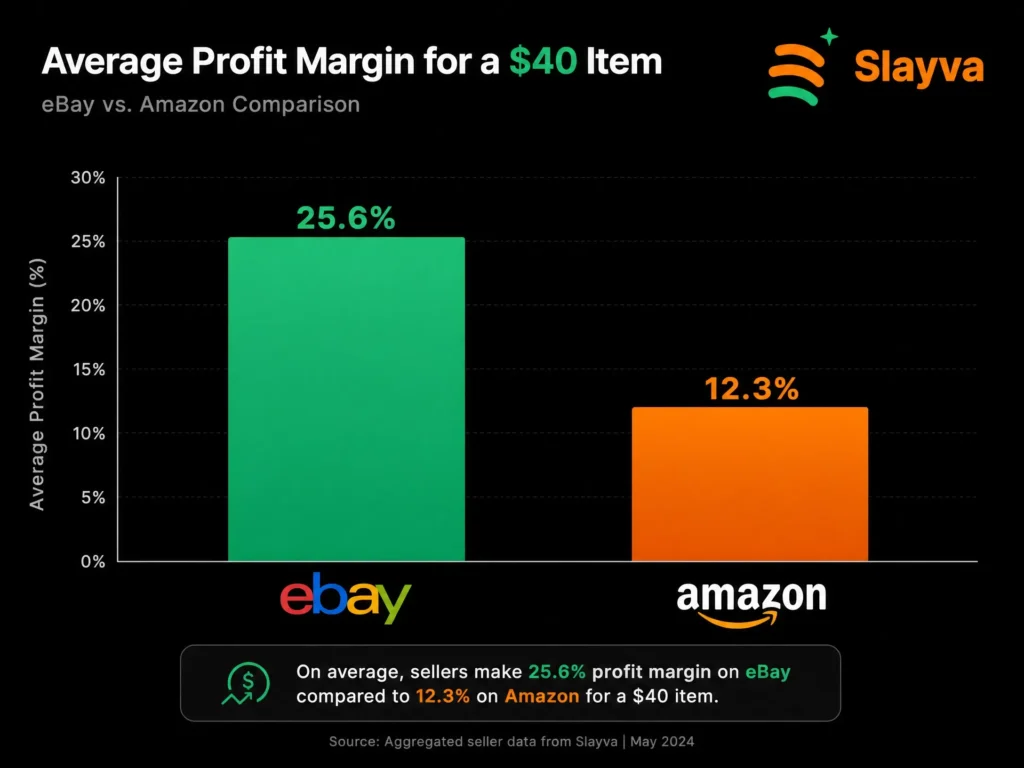
The question of eBay or Amazon which is more profitable depends on your product type and fulfillment method. There is no one-size-fits-all answer. When evaluating eBay or Amazon which is more profitable, you must consider your specific product category and business model.
Profitability on Amazon
Amazon generates higher top-line revenue for most sellers. The platform attracts over 2.3 million active sellers worldwide. Average annual revenue per Amazon seller is approximately $250,000, with the top 10 percent earning over $1 million.
In 2026, 44 percent of Amazon sellers reported revenue growth.
Amazon rewards new, branded products. Private label products. Wholesale products. Products with consistent supply chains. These categories command premium prices on Amazon. For sellers of new products, eBay or Amazon which is more profitable often tips in Amazon’s favor.
The FBA system increases buyer trust. Prime eligible products convert at higher rates. Buyers filter search results by Prime eligibility. Not offering Prime reduces your visibility and conversion rate.
Amazon’s fee structure eats into margins. A forty dollar sale with FBA fees leaves less profit than the same sale on eBay. Volume must compensate for margin compression. Many sellers find Amazon profitable only at scale. When asking eBay or Amazon which is more profitable, Amazon’s answer is volume.
Profitability on eBay
eBay generates higher profit per sale for most sellers. The lower fee structure when self-fulfilling means more money stays in your pocket. The difference compounds significantly as revenue grows. For sellers of used items, eBay or Amazon which is more profitable clearly favors eBay.
However, 42 percent of eBay sellers reported revenue declines in 2026, making the platform more challenging for some categories.
eBay rewards used, vintage, and unique products. These items carry higher margins than new products. You cannot buy a vintage camera wholesale. You source it for five dollars at a thrift store. You sell it for one hundred fifty dollars on eBay. This margin does not exist on Amazon. When evaluating eBay or Amazon which is more profitable, eBay’s answer is margin.
eBay allows flexible fulfillment. You self fulfill at your own cost structure. You control packaging expenses. You control shipping speed. You are not locked into a fulfillment network with fixed costs.
The Profitability Reality
For new branded products, Amazon often wins on total profit through volume. For used, vintage, collectible, and unique items, eBay wins on profit per sale. So, when asking eBay or Amazon which is more profitable, the answer is: it depends entirely on what you are selling.
The average net profit margin for marketplace sellers is 10-18 percent after fees, fulfillment, and advertising. However, 46 percent of sellers reported profit declines in 2026, with platform fees (47.5 percent) and advertising costs (42.5 percent) being the primary culprits.
The eBay vs Amazon for sellers profitability question ultimately comes down to your product selection and fulfillment strategy.
Amazon vs eBay Seller Experience
The Amazon vs eBay seller experience differs significantly in daily operations. Understanding this difference is crucial for anyone evaluating eBay vs Amazon for sellers.
Amazon Seller Experience
Amazon enforces strict rules. Performance metrics matter. Your account health dashboard tracks order defect rate, late shipment rate, and cancellation rate. Falling below thresholds results in account suspension.
Amazon controls the customer relationship. Buyers are Amazon’s customers, not yours. You cannot email customers for marketing purposes. You cannot include promotional materials in packages. Amazon owns the buyer data.
Amazon handles returns through FBA. Amazon’s return policy is generous to buyers. Customers return items easily. Sellers absorb the cost of returns. This customer-first approach generates trust but increases seller costs.
Amazon offers powerful advertising tools. Sponsored Products. Sponsored Brands. Sponsored Display. These pay-per-click campaigns drive traffic. They also add to your cost structure.
eBay Seller Experience
eBay offers more seller flexibility. You set your return policy. You control your customer communication. You manage your fulfillment process.
eBay allows customer relationship building. You can message buyers. You can include promotional materials in packages. You can build a brand following through your store.
eBay performance standards focus on defect rate, late shipments, and cases closed without seller resolution. Above Standard and Top Rated status provide visibility boosts and fee discounts. However, sellers not meeting performance expectations may face additional final value fees.
eBay offers Promoted Listings. These cost-per-sale ads boost visibility. You pay a percentage of the sale price only when the item sells. This model is lower risk than cost-per-click advertising.
Platform Comparison Table
Here is how the seller experience compares. This table answers the Amazon vs eBay seller experience question:
| Experience Factor | eBay | Amazon |
|---|---|---|
| Account Setup Difficulty | Low | Medium |
| Performance Standards | Flexible | Strict |
| Customer Ownership | Partial | None |
| Return Policy Control | Seller controlled | Amazon controlled |
| Advertising Model | Pay per sale | Pay per click |
| Category Restrictions | Few | Many, gated categories |
| New Seller Ramp Up | Weeks | Months |
| Account Suspension Risk | Low to Moderate | Moderate to High |
Best Platform to Sell Used Items Online
The question of the best platform to sell used items online has a clear winner. When evaluating eBay vs Amazon for sellers of used goods, the answer is definitive.
eBay for Used Items
eBay was built for used items. The platform originated as an auction site for collectibles and secondhand goods. The buyer base expects to find used, vintage, and pre-owned products. For anyone seeking the best platform to sell used items online, eBay is the obvious choice.
eBay categories specifically accommodate used items. Condition descriptions include New, Open Box, Certified Refurbished, Excellent Refurbished, Pre-owned, and For Parts. Buyers filter by condition. Sellers who accurately describe condition thrive.
eBay allows item-specific condition notes. Describe scratches. Show flaws in photos. Buyers on eBay accept imperfection when it is disclosed honestly. Returns decrease when descriptions are accurate.
Amazon for Used Items
Amazon allows used items in limited categories. Books. Music. Movies. Video games. Select electronics through Amazon Renewed. Most categories restrict used item sales.
Amazon’s used item processes are cumbersome. Condition guidelines are strict. Listing requirements are detailed. Approval processes exist for many categories.
Amazon buyers expect like-new condition. Items showing wear generate returns and complaints. The buyer base does not tolerate the condition variability that eBay buyers accept.
The Used Items Verdict
eBay is the best platform to sell used items online. The platform’s culture, buyer expectations, and listing tools all support the sale of pre-owned goods. Amazon’s culture, buyer expectations, and listing restrictions all favor new products. For secondhand goods, eBay wins hands down. In the eBay vs Amazon for sellers used items category, eBay is the undisputed champion.
Frequently Asked Questions About eBay vs Amazon for Sellers
Which platform has lower startup costs for new sellers?
eBay has lower startup costs for eBay vs Amazon for sellers 2026. No monthly subscription is required to start listing. The first 250 listings each month are free. Amazon charges $39.99 monthly for the Professional plan. FBA requires inventory investment upfront. For new sellers evaluating eBay vs Amazon for sellers, eBay is more accessible.
Can I sell on both eBay and Amazon at the same time?
Yes. Most professional sellers use both platforms. List new branded products on Amazon. List used and vintage products on eBay. Use Amazon FBA for fulfillment. Self-fulfill eBay orders. Multi-channel selling maximizes total revenue. This multi-platform approach is the most effective eBay vs Amazon for sellers strategy.
Which platform is better for handmade products?
eBay works well for handmade products. Handmade by Amazon exists but requires application and approval. The program restricts who can sell. eBay accepts handmade products without gating. The category thrives on eBay’s auction and fixed price formats.
How long does it take to get approved to sell on each platform?
eBay approval takes minutes to hours. Create an account. Verify your identity. Connect a payment method. Start listing. Amazon approval takes days to weeks. Identity verification is required. Category ungating may be needed. FBA setup adds time.
Which platform has better customer support for sellers?
Amazon offers stronger seller support through Seller Central. Phone support is available. Chat support is available. eBay offers email support and community forums. Phone support exists for higher tier store subscribers. Amazon’s support infrastructure is more developed.
Which platform generates more sales for new sellers?
Amazon generates more sales volume for new sellers with competitive pricing and FBA. The traffic volume is unmatched. eBay generates sales faster for used and unique items. The platform’s search algorithm favors listing freshness over sales history.
Do I need a business license to sell on either platform?
Neither platform requires a business license to create an account. Check your local regulations for operating an online business. Many sellers start without formal licensing. Register as revenue grows.
Which platform has more seller restrictions and gated categories?
Amazon has more restrictions. Categories like toys, beauty, grocery, and automotive are gated. Ungating requires invoices, performance history, or approval applications. eBay has fewer restrictions. Most categories are open to all sellers.

Conclusion
eBay vs Amazon for sellers 2026 is not an either-or decision. It is a product-specific decision. The most successful sellers understand that eBay vs Amazon for sellers is about matching products to the right platform.
Sell new, branded, replenishable products on Amazon. Use FBA for fulfillment. Leverage Amazon’s massive traffic. Accept lower margins for higher volume.
Sell used, vintage, collectible, and unique items on eBay. Self-fulfill orders. Leverage eBay’s lower fees. Accept lower volume for higher margins.
Sell on both platforms simultaneously. Match your products to the platform that rewards them. New items go to Amazon. Used items go to eBay. Handmade items go to both. Electronics go to both with proper condition grading. This diversified approach is the winning eBay vs Amazon for sellers strategy.
“The sellers earning the most in eBay vs Amazon for sellers 2026 are not choosing between eBay and Amazon. They are placing each product on the platform where it earns the highest profit.”
The platform decision matters less than your product selection and operational execution. Pick one platform today. List your products. Learn from results. Add the second platform when your systems support it.
Done beats perfect. Start selling. Learn. Adjust. Grow.